# Why Go is the best language for AI-assisted coding
Canonical URL: https://zero2vibecode.com/blog/go-best-language-ai-coding
Date: 2026-08-13
Tags: claude-code, agents, models, beginner
Google explains why Go's design makes it uniquely suited for working with AI coding assistants - and what that means for beginners.
When AI writes most of your code, the rules change. You're no longer measuring a language by how fast you can type it - you're measuring how well it helps you review, verify and maintain what the AI produces. Google's Go team makes a compelling case that their language is uniquely built for this new reality.
## From writing code to reviewing it
Traditional programming languages optimized for writing speed - quick prototyping, clever one-liners, minimal boilerplate. But when an AI assistant can generate hundreds of lines in seconds, those priorities flip. Now you need:
1. **Readability over writability** - Code must be instantly understandable when reviewing AI output
2. **Consistency over cleverness** - Predictable patterns beat creative shortcuts
3. **Safety nets** - Built-in checks to catch AI hallucinations before they reach production
Go was designed 20 years ago for large team collaboration at Google. Its creators prioritized exactly these qualities - making it accidentally perfect for the AI era.
## Go is a complete platform
Most languages give you syntax and a compiler. Go ships with an integrated toolchain covering the entire development lifecycle:
| Tool | Purpose | AI Benefit |
|------|---------|------------|
| `gofmt` | Automatic code formatting | All code looks identical regardless of source |
| `go test` | Built-in testing framework | AI can self-validate its output |
| `govulncheck` | Vulnerability scanner | Catches risky dependencies AI might suggest |
| `gopls` | Language server | Provides IDE features to AI tools |
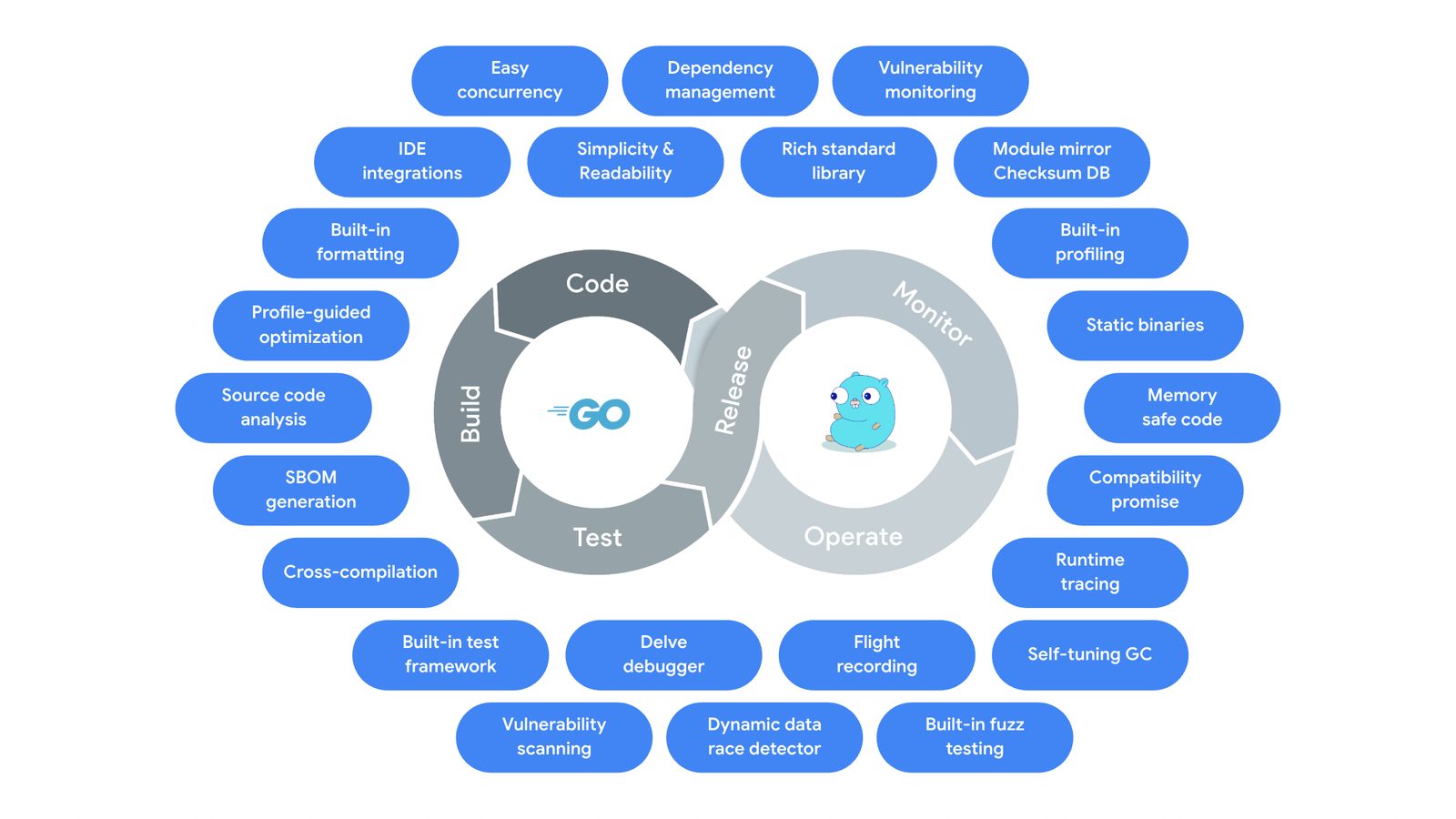
This matters because AI coding tools work best when they can:
- Validate their own output
- Iterate quickly on feedback
- Access security checks without external setup
When choosing tools for AI-assisted development, look for integrated ecosystems over patchworks of plugins. The fewer moving parts, the better the AI can navigate the system.
## Readability as a superpower
Go enforces several rules that make AI-generated code easier to review:
1. **No implicit anything** - All types must be declared, no "magic" behavior
2. **One way to do things** - Fewer syntax variations means less deciphering
3. **Standardized formatting** - `gofmt` ensures consistent spacing, brackets, etc.
This creates what Gophers call "code you can't tell who wrote" - whether human or AI. When reviewing:
- Hallucinated API calls stand out immediately
- Logic errors are easier to spot in simple control flow
- Security issues don't hide behind clever syntax
## Built-in safety nets
Go catches AI mistakes at multiple levels:
1. **Compiler checks** - Rejects invalid types, uninitialized variables, etc.
2. **Dependency scanning** - Flags vulnerable third-party packages
3. **Fuzz testing** - Automatically finds edge cases AI might miss
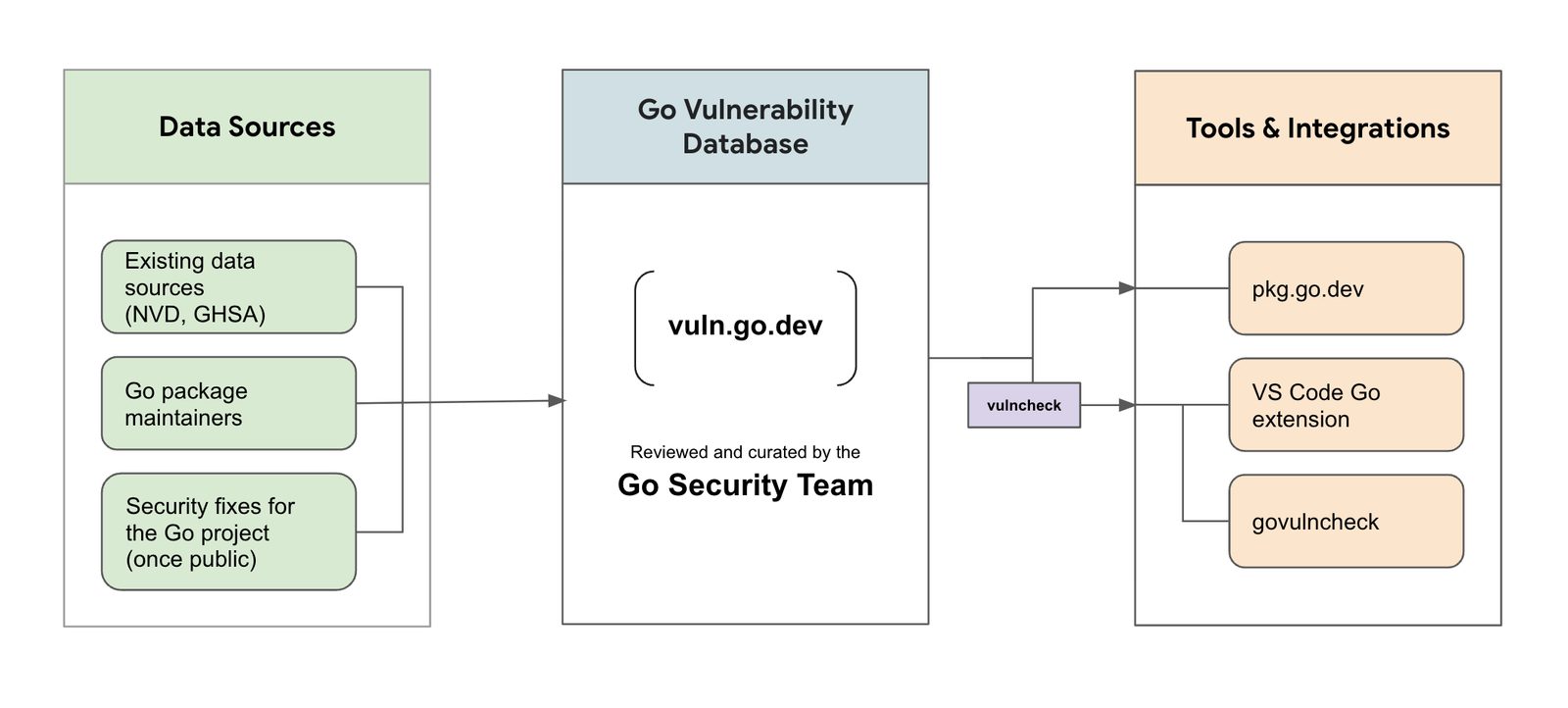
This is crucial because LLMs often:
- Invent non-existent methods/properties
- Suggest outdated dependencies
- Miss boundary conditions in logic
AI coding tools are especially prone to "dependency hallucinations" - suggesting packages that are outdated, unmaintained, or even malicious. Go's standard library reduces this risk by providing battle-tested alternatives.
## Long-term maintainability
AI will generate code at unprecedented scale. Go's features prevent this from becoming unmanageable:
- **Backward compatibility** - Code from 2012 still works today
- **Single binaries** - No dependency hell when deploying AI-generated services
- **Modernizers** - Tools that automatically update old code patterns
This means:
- Less time fixing breaking changes
- More confidence in automated refactoring
- Easier adoption of new language features
## What this means for beginners
If you're learning to code with AI assistants:
1. **Start with Go** - Its constraints actually help by reducing AI's "creative" mistakes
2. **Lean on the toolchain** - Let `go test` and `govulncheck` teach you what good code looks like
3. **Study the standard library** - It's where Go's idioms live, and what the AI was trained on
The languages that win in the AI era won't be the ones that are fastest to type - they'll be the ones that make AI's output easiest to verify and maintain. Go's 20-year head start on those priorities makes it uniquely positioned.
Want to try all of this hands-on? Start with the free [Claude Code from Zero](/learn/claude-code) course.
Based on Google's announcement, "Why Go is an Ideal Language for AI-Assisted Software Engineering". Written for people learning to build with these tools.