When you build with AI today, you experience a strange new freedom. What once required a team of developers now fits in your browser. But this shift hints at a larger question: will AI help us do more with less, or will it create even more work to manage? OpenAI’s recent essay frames this as a choice between two futures—one where intelligence runs deep, and another where it spreads wide.

The tension at the heart of progress
Humanity has always faced a gap between what we can imagine and what we can build. Galileo discovered Jupiter’s moons with a handmade telescope, while the James Webb Space Telescope required a global effort costing billions.
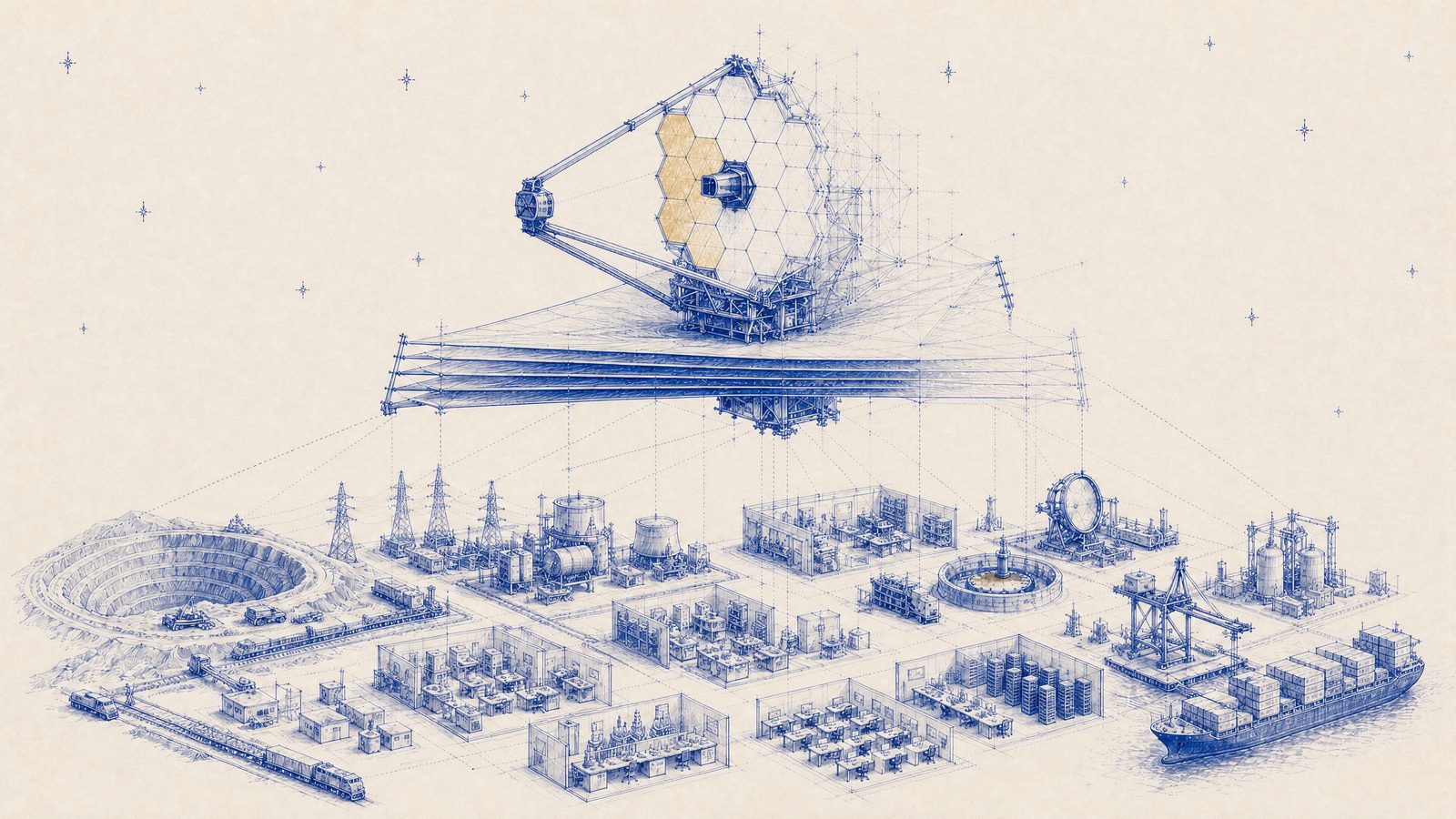
This isn’t just about scale—it’s about how progress changes. Early breakthroughs often come from lone thinkers, but later advances demand armies of specialists. OpenAI points to Moore’s Law: sustaining it now takes 18x more researchers than in the 1970s. The essay calls this the “rising cost of progress”—each step forward requires more infrastructure, more bureaucracy, more coordination.
Note
The “complements” to genius—tools, institutions, supply chains—aren’t just helpers. They’re what turn ideas into reality. Without them, even the best ideas stay stuck.
How AI changes the equation
Today’s AI tools already reduce the “execution gap” for beginners:
- Turning sketches into code
- Searching technical literature instantly
- Prototyping without infrastructure
This feels like progress tilting toward depth—doing more with less. But the essay warns this might be temporary. If AI starts generating too many good ideas (better game concepts, research hypotheses, product designs), we could become overwhelmed by things to build. Execution could become scarce again, just in a new way.
Two civilizations, two paths
1. The civilization of depth
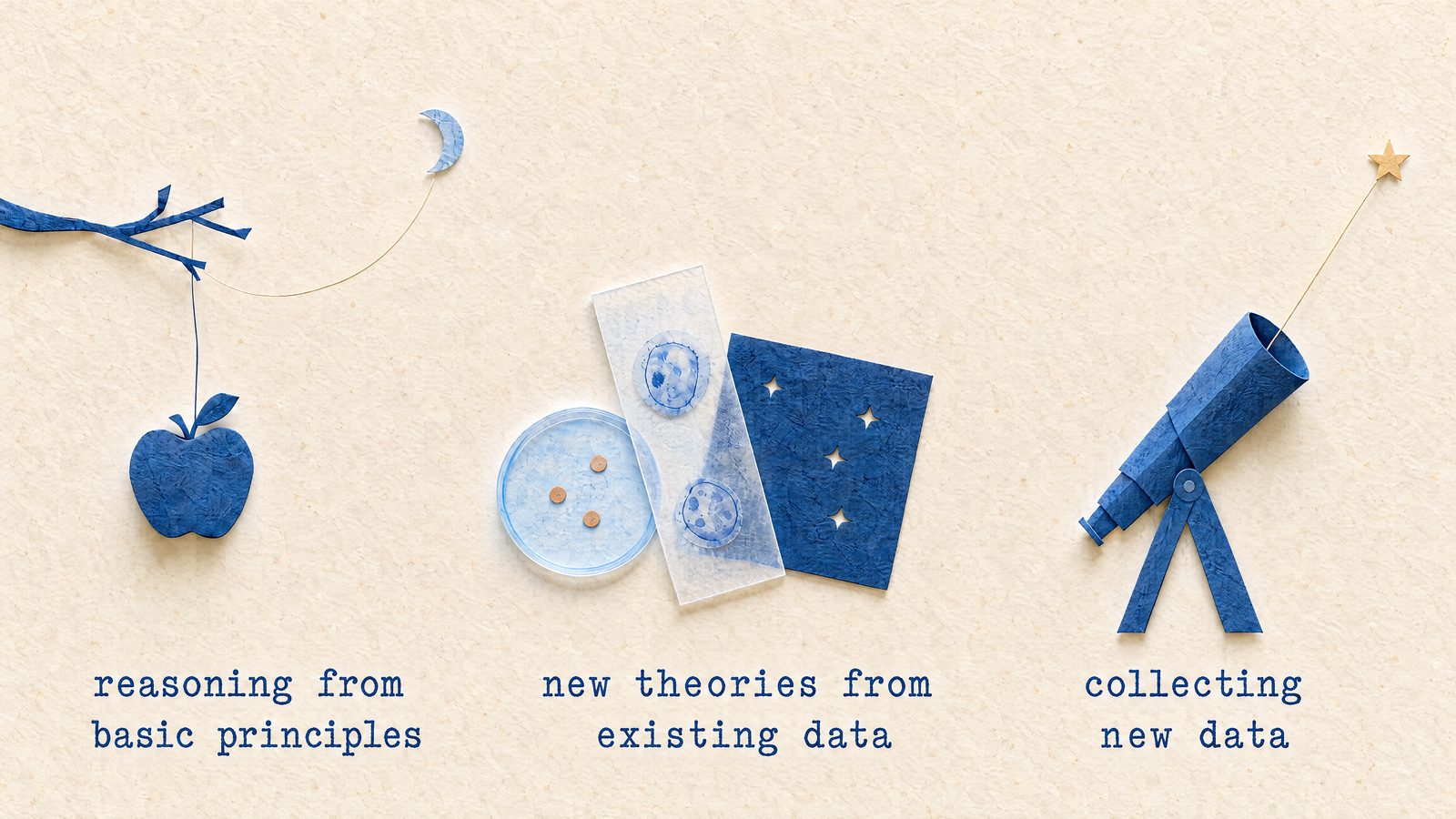
Here, intelligence solves problems by thinking smarter, not building bigger:
- Reasoning from principles: Like mathematicians proving theorems without new data
- Rediscovering existing data: Finding patterns in what we’ve already collected
- Precision experimentation: Running only the most crucial real-world tests
For builders, this would mean:
- Needing fewer resources to test ideas
- Less time spent on “bureaucracy” (deployment, scaling, compliance)
- More focus on high-level creativity
Think of it as AI helping you prototype a mobile app without needing cloud credits, or debug code without setting up test environments.
2. The civilization of width
In this future, every breakthrough demands more physical infrastructure:
- More labs for parallel experiments
- More factories for prototypes
- More energy for computation
The essay uses biology as an example: even with AI-designed drugs, we still need massive human trials. For builders, this path would mean:
- Scaling operations becomes the main challenge
- Managing AI “workers” (coding, testing, deploying) dominates projects
- Physical constraints (hardware, energy) limit progress
Important
Width doesn’t mean failure—it means brilliant ideas create more work. If AI designs 10,000 viable startups, someone still needs to build them.
What this means for you now
-
Today’s tools favor depth
- Use AI to prototype fast and test ideas cheaply (learn how)
- Focus on creativity—execution is temporarily easier
-
Prepare for width
- Learn to orchestrate AI agents (they’ll handle future “bureaucracy”)
- Study scaling—even simple apps may need robust pipelines
-
Watch the bottlenecks
- If deploying becomes harder than designing, width is winning
- If tools keep reducing infrastructure needs, depth is prevailing
The silent partner: institutional intelligence
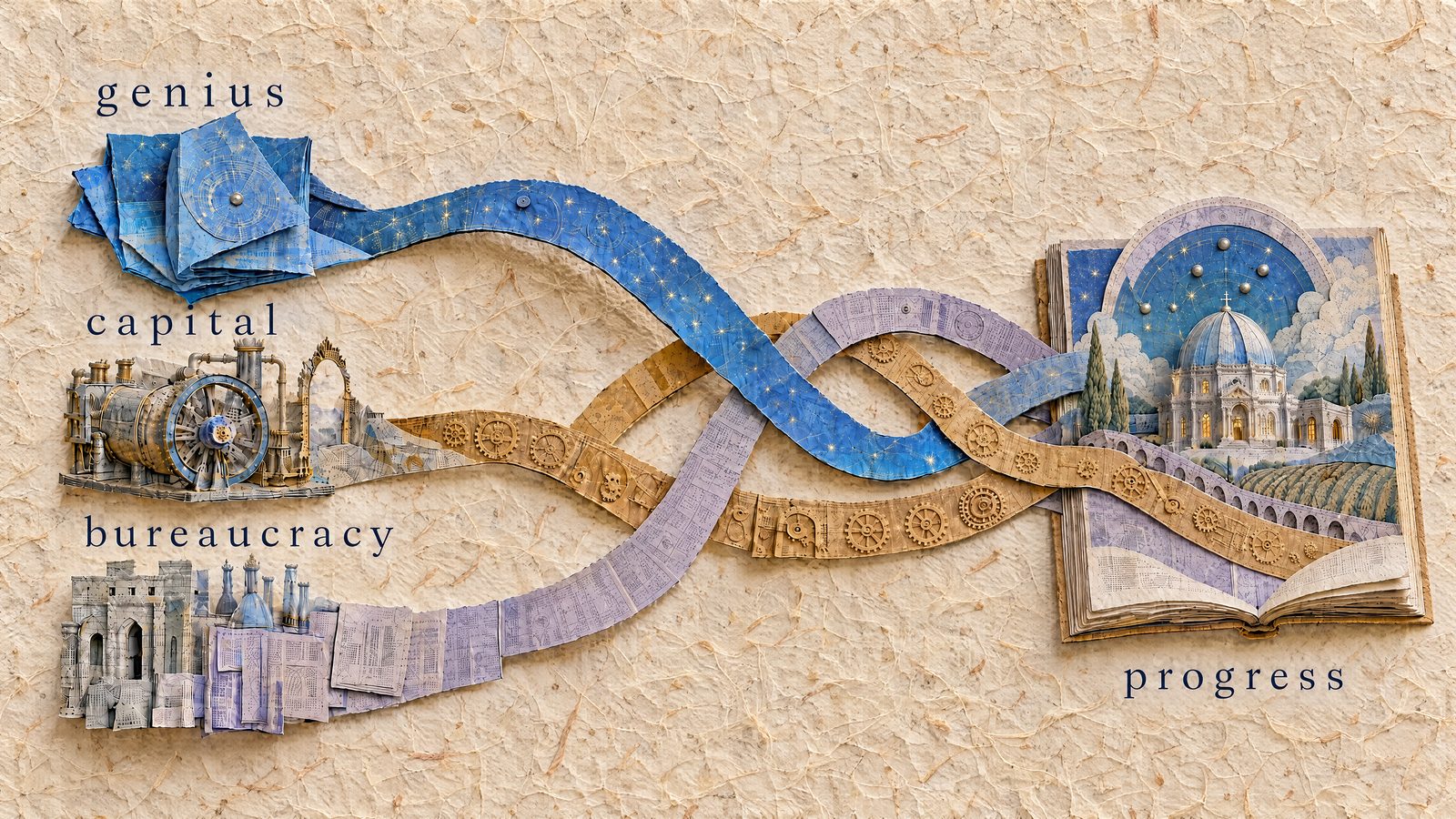
The essay introduces a crucial idea—institutional intelligence. This isn’t about genius; it’s the unglamorous work that makes ideas real:
| Genius Intelligence | Institutional Intelligence |
|---|---|
| Designs the rocket | Mines the metals for it |
| Writes the algorithm | Maintains the servers |
| Creates the game | Handles player support |
For builders, this means:
- Even with AI, someone must handle “the boring parts”
- Future tools might specialize in institutional tasks (compliance, scaling)
Frequently asked questions
Which path is more likely?
The essay suggests both will coexist. AI may deepen fields like math (requiring less infrastructure) while widening others like biotech (demanding more labs).
How should beginners prepare?
Build habits now that work in either future:
- Learn to document (for width’s bureaucracy)
- Practice rapid iteration (for depth’s creativity)
- Study AI orchestration (managing multiple agents)
The takeaway
AI won’t just make us smarter—it will reshape what “progress” requires. The tools you use today hint at both futures: they simplify execution (depth) but also generate more to execute (width). Watch which pattern dominates your projects, and adapt accordingly.
Want to try all of this hands-on? Start with the free Claude Code from Zero course.
Source
Based on OpenAI’s essay, “The eternal complement”. Written for people learning to build with these tools.